
Kemunculan kabut asap masih menunjukkan pola pengulangan sama di berbagai wilayah di Indonesia setiap tahunnya. Kabut asap menyelemuti langit bersamaan dengan datangnya musim kemarau. Langit muram, kesehatan masyarakat terancam, dan aktivitas ekonomi maupun mobilitas sosial terganggu.
Kabut asap bukan bencana alam dan seharusnya tidak dipahami sebagai fenomena musiman. Ia lahir dari kebakaran hutan dan lahan (karhutla) yang dalam banyak kasus berkaitan erat dengan aktivitas manusia. Kondisi ini akan makin mengenaskan jika terjadi di areal gambut. Setitik api dan kerentanan ekosistem gambut di masa kemarau, dapat memicu bencana besar dan akan sulit dikendalikan.
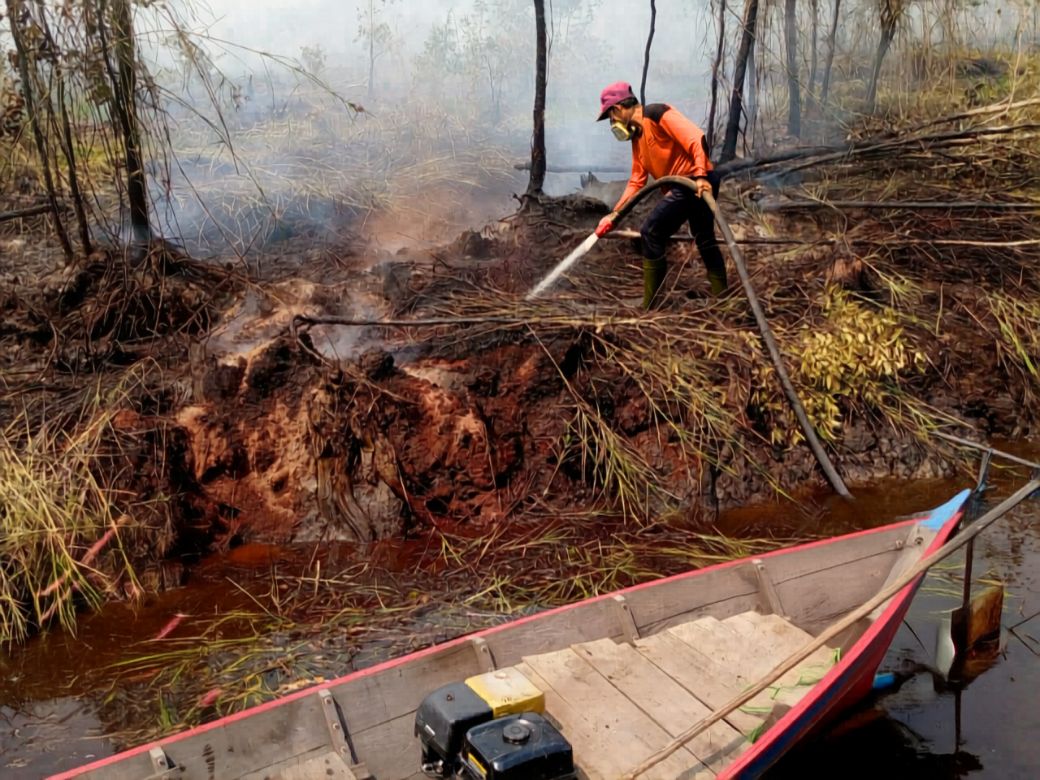 TPK Mantaren I-IKH berupaya memadamkan bara didalam lapisan gambut, Karhutla September 2023. Sumber foto: KPSHK.
Berkaca dari kejadian yang terus berulang, menyikapi karhutla bukan pada penanganan melainkan lebih pada pentingnya pencegahan. Isu ini lebih dekat dengan persoalan tata kelola; bagaimana lahan dimanfaatkan, bagaimana pengawasan dijalankan, serta sejauh mana pencegahan benar-benar ditempatkan sebagai prioritas sejak awal. “Karhutla itu bukan sekadar api. Ini soal bagaimana kita menjaga dan mengelola lahan sejak awal,” ujar Pirit, Ketua LPHD Mantaren I. Ia menegaskan bahwa pencegahan yang kuat justru pada bagaimana agar tidak muncul titik api.
Pendekatan penanganan karhutla masih sering bertumpu pada respons ketika api sudah muncul. Situasi ini menjadi semakin berisiko pada wilayah gambut yang mudah mengering saat musim kemarau. Api dapat menjalar di bawah permukaan tanah, tidak terlihat secara langsung, namun terus menyebar dan sulit dipadamkan.
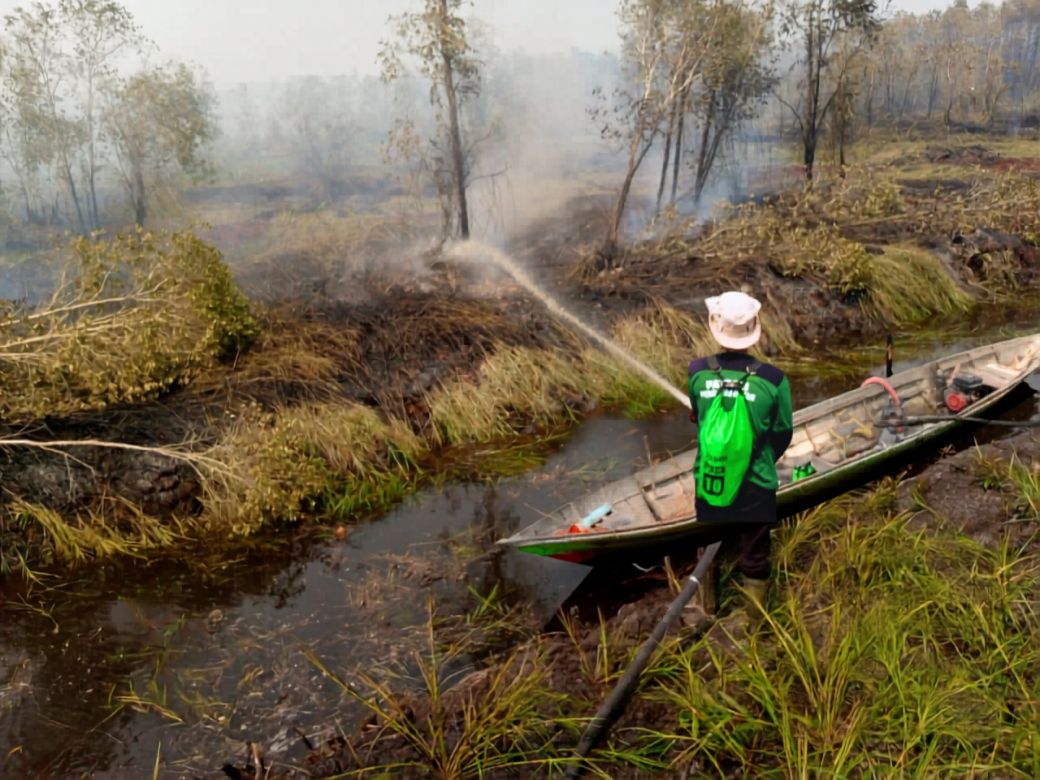
TPH Mantaren I-IKH berusaha memadamkan api diseberang sei, mencegah api merambat keseberang sei. Sumber foto: KPSHK.
Desa Mantaren I menjadi salah satu lokasi yang menunjukkan perubahan pendekatan tersebut. Lembaga Pengelola Hutan Desa (LPHD) bersama Tim Penjaga Hutan (TPH) mulai memperkuat peran pencegahan melalui pemantauan rutin, pengawasan kawasan rawan, dan pembacaan tanda-tanda awal sebelum kebakaran terjadi. “Dulu kami lebih banyak menunggu dan memadamkan. Sekarang kami lebih fokus mencegah. Kalau sudah terbakar yang hilang bukan hanya hutan. Tenaga, waktu, dan kondisi lingkungan sulit pulih,” ujar Saldi, pengurus LPHD Mantaren I.
Kerja pencegahan tersebut dilakukan melalui patroli rutin, pengamatan titik-titik rawan, serta komunikasi aktif dengan warga sekitar. Perubahan kecil pada lanskap tanah yang mulai mengering, munculnya asap tipis, atau perubahan aroma gambut menjadi sinyal penting yang harus segera ditindaklanjuti. “Kalau gambut, api tidak selalu terlihat jelas. Kadang hanya asap tipis atau bau tanah yang berubah sudah cukup menjadi tanda. Kami langsung siaga,” tutur Weli, anggota TPH Desa Mantaren I.
Pengalaman Mantaren I memperlihatkan, karhutla bukan semata soal api yang muncul, melainkan bagian dari sistem yang lebih luas; tata kelola lahan, keterlibatan masyarakat, dan penempatan pencegahan sebagai prioritas utama. LPHD, TPH, dan masayarakat lebih antisipatif, bukan bukan sekadar respons.
Penulis: Alma
Editor: JW & Kiss
The occurrence of haze continues to exhibit the same recurring pattern in various regions of Indonesia every year. Haze blankets the skies with the arrival of the dry season. The skies are gloomy, public health is threatened, and economic activity and social mobility are disrupted.
Haze is not a natural disaster and should not be understood as a seasonal phenomenon. It arises from forest and land fires (karhutla), which in many cases are closely related to human activity. This situation is even more dire if it occurs in peat areas. A single spark and the vulnerability of the peat ecosystem during the dry season can trigger a major disaster that will be difficult to control.
The Mantaren I-IKH TPK attempts to extinguish embers within the peat layer. Karhutla September 2023. Photo source: KPSHK.
Reflecting on the recurring occurrences, addressing forest and land fires is not about handling them but rather the importance of prevention. This issue is more closely tied to governance issues: how land is utilized, how monitoring is carried out, and the extent to which prevention is truly prioritized from the outset. “Forest and land fires are not just about fire. It’s about how we protect and manage the land from the start,” said Pirit, Head of the Mantaren I Forest Management Agency (LPHD). He emphasized that strong prevention lies in preventing fires from occurring.
The approach to managing forest and land fires often relies on responding to fires once they have already started. This situation becomes even more risky in peatland areas, which easily dry out during the dry season. Fires can spread beneath the ground’s surface, invisible to the naked eye, but continue to spread and are difficult to extinguish.
The Mantaren I-IKH Forest Management Agency (TPH) is working to extinguish a fire across the river, preventing it from spreading across the river. Photo source: KPSHK.
Mantaren I Village is one location demonstrating this shift in approach. The Village Forest Management Agency (LPHD) and the Forest Guard Team (TPH) have begun strengthening their prevention role through routine monitoring, surveillance of vulnerable areas, and reading early warning signs before a fire occurs. “Previously, we spent more time waiting and extinguishing fires. Now, we focus more on prevention. Once a fire has occurred, it’s not just the forest that’s lost. We also lose energy, time, and the environment, making it difficult to recover,” said Saldi, a manager at the Mantaren I Village Forest Management Agency (LPHD).
This prevention effort is carried out through routine patrols, monitoring vulnerable areas, and actively communicating with local residents. Small changes in the landscape, such as the drying of the soil, the appearance of thin smoke, or a change in the smell of peat, are important signals that require immediate action. “With peat fires, they aren’t always clearly visible. Sometimes, just thin smoke or a change in the smell of the earth is enough to alert us. We immediately go on alert,” said Weli, a member of the Mantaren I Village Forest Management Team (TPH).
Mantaren I’s experience shows that forest and land fires are not just about the fire itself, but part of a broader system: land management, community involvement, and prioritizing prevention. The LPHD, TPH, and the community are more proactive, not just responsive.
Author: Alma
Editor: JW & Kiss
Add a Comment