
Kecamatan Kahayan Hilir, Kabupaten Pulang Pisau, skema Perhutanan Sosial (PS) telah diterapkan di kawasan gambut yang secara ekologis sangat rentan terhadap kebakaran dan dampak perubahan iklim. Komunitas lokal, seperti Lembaga Pengelolaan Hutan Desa (LPHD) dan Masyarakat Hukum Adat (MHA), merupakan aktor utama yang berperan langsung dalam menjaga kawasan hutan melalui kegiatan patroli dan penanaman.
 Kondisi vegetasi areal rawa gambut banyak tumbuh pohon Tumih (Combretocarpus rotundatus) di salah satu hutan desa Kalawa. Sumber foto: KPSHK.
Meskipun PS telah memberikan dampak positif terhadap perlindungan ekosistem gambut dan pemberdayaan ekonomi, pelaksanaan program di lapangan masih menghadapi sejumlah kendala terkait kelembagaan dan pendanaan. Hal ini diungkapkan oleh Rokmond Onasis, Institution and Economic Manager (IEM) KPSHK, “Kapasitas kelembagaan Lembaga Pengelola Hutan Desa dan Kelompok Usaha Perhutanan Sosial belum merata. Masih banyak hal yang dibutuhkan, seperti pendampingan teknis, pelatihan kapasitas, akses pendanaan, serta modal usaha.”
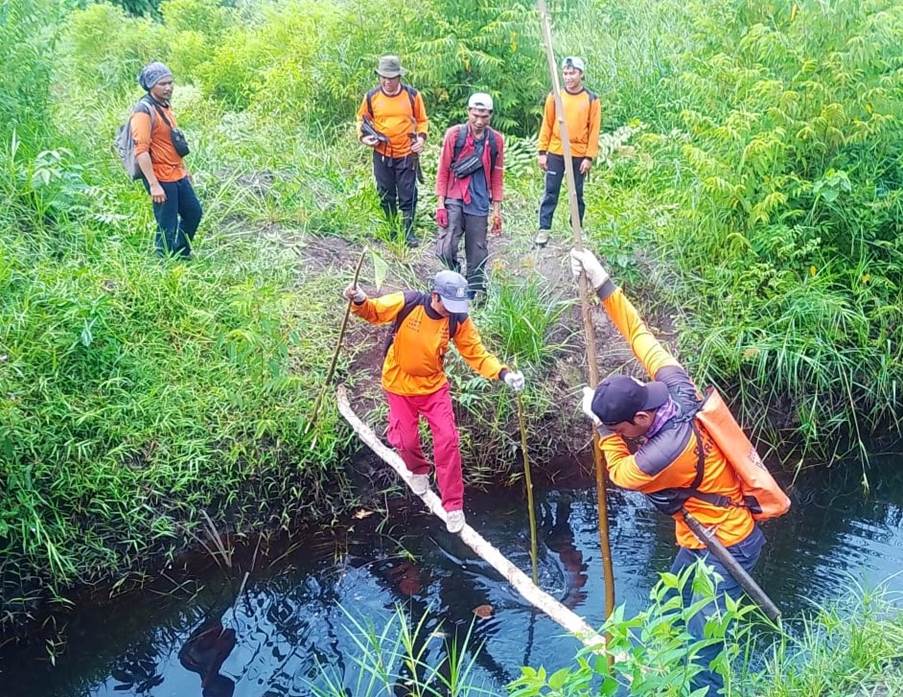
Tim Patroli Karhutla LPHD Kalawa melakukan patroli mingguan di areal rawan kebakaran pada musim kemarau. Sumber foto: KPSHK.
Pengelolaan PS, khususnya di empat Hutan Desa Buntoi, Kalawa, Gohong, dan Mantaren I di wilayah Kahayan Hilir, masih bergantung pada pihak ketiga. Sebagian besar kegiatan PS, seperti patroli hutan, pembangunan infrastruktur pemulihan gambut, penanaman, dan program Kelompok Usaha Perhutanan Sosial (KUPS), masih sangat didukung dan difasilitasi oleh pihak ketiga, yaitu Konsorsium Pendukung Sistem Hutan Kerakyatan (KPSHK).
Melalui Program Inisiatif Kahayan Hilir yang diprakarsai KPSHK sejak 2022, manfaatnya mulai dirasakan oleh pengelola hutan desa dan masyarakat. Namun, di sisi lain, masyarakat juga mengeluhkan lemahnya peran aktif pemerintah daerah (Pemda) dalam program PS. Tidak adanya dukungan Pemda dapat menghambat integrasi program PS ke dalam rencana pembangunan daerah.
Masyarakat adat dan lokal memiliki posisi penting dalam pengelolaan PS dan agenda iklim. Mereka memiliki mandat langsung terkait perubahan iklim, terutama dalam mitigasi kebakaran hutan dan lahan (karhutla), seperti pembentukan tim patroli hutan dan Masyarakat Peduli Api (MPA). Namun, pengakuan dan peran Masyarakat Hukum Adat (MHA) dalam dokumen daerah masih belum diutamakan. Pengakuan MHA hanya muncul secara terbatas dalam peraturan daerah tertentu dan belum terintegrasi ke dalam dokumen pembangunan, PS, maupun kebijakan iklim. Kesenjangan kebijakan ini berpotensi menimbulkan konflik dan menyebabkan hak adat terpinggirkan, padahal keterlibatan mereka merupakan kunci efektivitas mitigasi iklim berbasis masyarakat.
Melihat kondisi tersebut, untuk memastikan keberlanjutan program PS dan mengoptimalkan perannya dalam adaptasi perubahan iklim, diperlukan rekomendasi kebijakan yang berfokus pada penguatan di tingkat tapak. Beberapa rekomendasi penting antara lain merevisi atau menyusun Perda MHA serta mengintegrasikan peran adat secara eksplisit ke dalam Rencana Aksi Daerah PS dan Rencana Aksi Daerah Iklim. Hal ini juga mencakup pengembangan skema insentif berbasis hasil, seperti perdagangan karbon, guna memberikan keadilan ekonomi bagi MHA.
Rekomendasi lain yang dapat diusulkan adalah penyusunan regulasi daerah yang lebih spesifik, seperti Perda atau Perbup, sebagai payung hukum untuk memberikan bantuan pendanaan dan pendampingan teknis yang berkelanjutan kepada LPHD/KUPS. Selama ini, pengelolaan PS dan KUPS masih sangat bergantung pada dukungan pemerintah pusat atau donor. Pemerintah daerah juga perlu didorong untuk memperkuat kolaborasi yang telah terjalin antara LPHD/MHA dan LSM (KPSHK), serta meningkatkan koordinasi lintas sektor guna mendukung keberlanjutan program.
Melalui penguatan regulasi daerah yang spesifik, dukungan finansial yang jelas, serta pengakuan penuh terhadap peran masyarakat adat, Perhutanan Sosial di Pulang Pisau berpotensi bertransformasi menjadi tulang punggung pembangunan rendah karbon, peningkatan kesejahteraan masyarakat, dan strategi adaptasi perubahan iklim di tingkat lokal.
Penulis: Alma
In Kahayan Hilir District, Pulang Pisau Regency, the Social Forestry (SF) scheme has been implemented in peat areas that are ecologically highly vulnerable to fires and the impacts of climate change. Local communities, such as the Village Forest Management Institution (LPHD) and the Customary Law Community (MHA), are the main actors directly involved in protecting the forest area through patrols and planting activities.
The vegetation in the peat swamp area is abundant with Tumih trees (Combretocarpus rotundatus) in one of the Kalawa village forests. Photo source: KPSHK.
Although the Social Forestry (SF) has had a positive impact on peat ecosystem protection and economic empowerment, program implementation in the field still faces several institutional and funding challenges. Rokmond Onasis, Institution and Economic Manager (IEM) of KPSHK, stated, “The institutional capacity of Village Forest Management Institutions and Social Forestry Business Groups is not evenly distributed. Many things are still needed, such as technical assistance, capacity building training, access to funding, and business capital.”
The Kalawa LPHD Forest and Land Fire Patrol Team conducts weekly patrols in fire-prone areas during the dry season. Photo source: KPSHK.
Social Forest Management (SF), particularly in the four village forests of Buntoi, Kalawa, Gohong, and Mantaren I in the Kahayan Hilir region, still relies on third parties. Most SF activities, such as forest patrols, peat restoration infrastructure development, planting, and the Social Forestry Business Group (KUPS) program, are still heavily supported and facilitated by a third party, the Community Forestry System Support Consortium (KPSHK).
Through the Kahayan Hilir Initiative Program, initiated by KPSHK in 2022, the benefits are beginning to be felt by village forest managers and communities. However, on the other hand, communities also complain about the weak active role of the local government (Pemda) in the SF program. The lack of local government support can hamper the integration of the SF program into regional development plans.
Indigenous and local communities play a crucial role in SF management and the climate agenda. They have a direct mandate related to climate change, particularly in mitigating forest and land fires (karhutla), such as establishing forest patrol teams and Fire Awareness Communities (MPA). However, the recognition and role of Indigenous Law Communities (MHA) in regional documents remains under-recognized. Recognition of MHA appears only in limited regional regulations and has not been integrated into development documents, community-based climate policies, or climate policies. This policy gap has the potential to create conflict and marginalize customary rights, even though their involvement is key to the effectiveness of community-based climate mitigation.
Given this situation, to ensure the sustainability of the Community-Based Climate Mitigation program and optimize its role in climate change adaptation, policy recommendations focused on strengthening the community at the grassroots level are needed. Several key recommendations include revising or drafting the MHA Regional Regulation and explicitly integrating the role of customary law into the Regional Action Plan for Community-Based Climate Mitigation and the Regional Action Plan for Climate Mitigation. This also includes the development of results-based incentive schemes, such as carbon trading, to provide economic justice for MHA.
Another recommendation is the development of more specific regional regulations, such as a Regional Regulation or Regent Regulation, as a legal umbrella for providing ongoing funding and technical assistance to the LPHD/KUPS. Currently, the management of the PS and KUPS remains heavily dependent on support from the central government or donors. Local governments also need to be encouraged to strengthen existing collaborations between LPHD/MHA and NGOs (KPSHK), as well as improve cross-sector coordination to support program sustainability.
Through strengthening specific regional regulations, providing clear financial support, and fully recognizing the role of indigenous communities, Social Forestry in Pulang Pisau has the potential to transform into a backbone of low-carbon development, improving community welfare, and providing a climate change adaptation strategy at the local level.
Author: Alma
Add a Comment