

Galam is a type of woody plant that often lives in swamp areas. People, especially in Kalimantan, often call this plant Gelam or Galam. Sudrajat’s (2016) study states that Galam can survive in extreme land conditions, such as high temperatures and high air levels. Galam is able to survive in Ph 3-5 conditions. Apart from that, Galam can generally survive in acid sulfate swamp conditions containing peat and humus soil. They can appear where they want, survive natural disasters, and become potential for the people around them.
Peat is a type of soil with a high organic content, usually containing more than 65% organic material and having a high acidity level. One of them is in Kahayan Hilir, to be precise in four villages, namely Buntoi, Gohong, Kalawa, and Mantaren I, which are villages assisted by the KPSHK program. Galam wood is only used by a small portion of the community for its wood. Galam wood has long been a source of income and employment due to its many uses.
“If you pass along the causeway there is always Galam wood being bought and sold, both whole and clean without skin in various diameters,” said Bayu, as KPSHK’s GIS Manager who often visits and interviews the community in Kahayan Hilir.
Bayu then said that small Galam skins were priced at 500 rupiah per stem to clean them, while large Galam skins were priced at 1,000 rupiah per stem. Those without skin are usually sent to the islands of Java and Bali.
“The existence of people who cultivate and maintain Galam wood until it has a large diameter, is the potential that Galam wood will have in the future,” said Bayu
The potential for Galam wood in Kahayan Hilir has several significant aspects. First, Galam wood (Melaleuca leucadendron L.) is a type of wood that is popular and often used by people in Kahayan Hilir. This was conveyed by the people of 4 villages assisted by KPSHK during the Focus Group Discussion (FGD) for collecting Climate, Community & Biodiversity data.
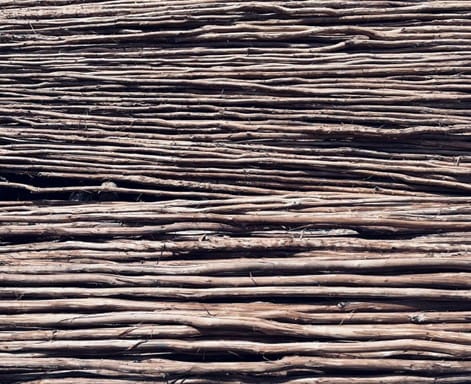
Second, Galam wood can be used as a building material in various applications, such as building materials for houses, furniture, piles, bridge floors and building pillars. Then third, use in environmentally friendly construction where Galam wood provides benefits in the form of reducing the use of conventional materials such as concrete or steel.
“The strong nature of wood, Galam wood is considered an ideal building material, even in our village the average building material for houses and bridges also uses Galam wood,” said Guntur, a person who usually buys and sells Galam in Mantaren I Village.
Fourth, the road reinforcement structure also uses Galam wood. It is mainly used to strengthen road embankments, retaining wall foundations, and embankment sloping foundations. The use of Galam wood increases the bearing and shear-resisting capacity of the soil.
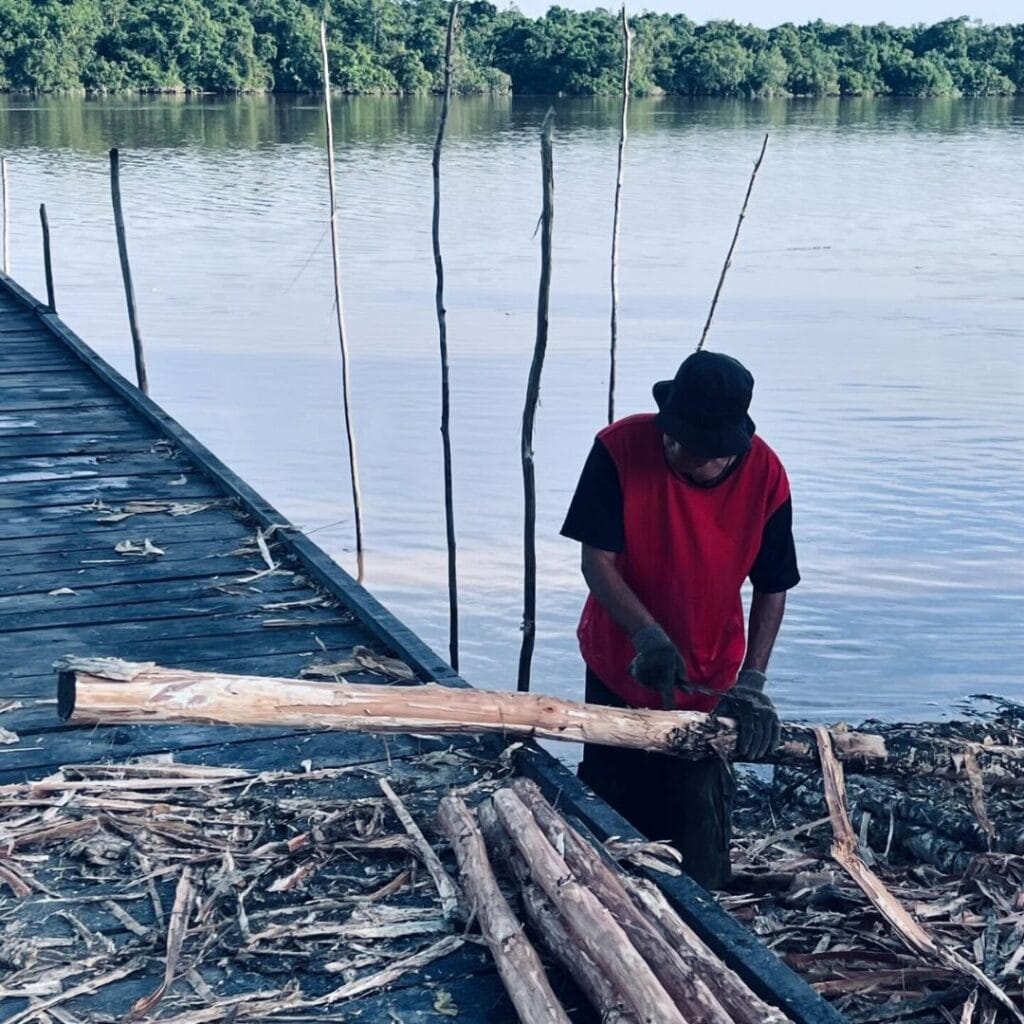
Galam wood has various benefits so that it is one of the woods with great potential in Kahayan Hilir which can improve the quality of life of the community, such as in the economy, construction, waste utilization, and use in environmentally friendly construction.
However, it is important to pay attention to sustainability in meeting the needs of the community’s economic value and the availability of Galam wood. Accompanied by public and forestry service awareness in good social forestry management, sustainable cultivation, forest protection, and assistance with Galam wood processing can be of potential value for more environmentally friendly economic prosperity for the people in Kahayan Hilir.
Author: Alma Tiara
Editor: Aris
Library Source:
KPSHK Visit and Data Collection Activities
Sudrajat DJ. 2016. Characteristics of Galam (Meulaleca leucadendra) Seeds: Maturity Level, Morphology, Germination and Seed Saving Power. Journal of Forest Plant Seeds 49(2):53-158
Add a Comment