
Suara mesin perahu terdengar di Sungai Kahayan. Seorang warga membawa hasil tangkapan ikan lalu berhenti di sisi rumah panggung. Air berada dekat dengan lantai rumah. Saat air naik, lantai terasa lembap. Saat air surut, lumpur terlihat di bawah rumah.
Desa Gohong, Kecamatan Kahayan Hilir, Kabupaten Pulang Pisau, Kalimantan Tengah hidup bersama perubahan air. “Kalau air berubah, kerja kami ikut berubah,” kata Lampang.
Perubahan itu tidak lagi seperti dulu. Permukaan air sungai naik dan turun tanpa pola. Warga masih melihat bekas air di tiang rumah, tetapi cara lama tidak lagi membantu. “Dulu kami hafal waktunya. Sekarang tidak bisa,” ujar Lampang.
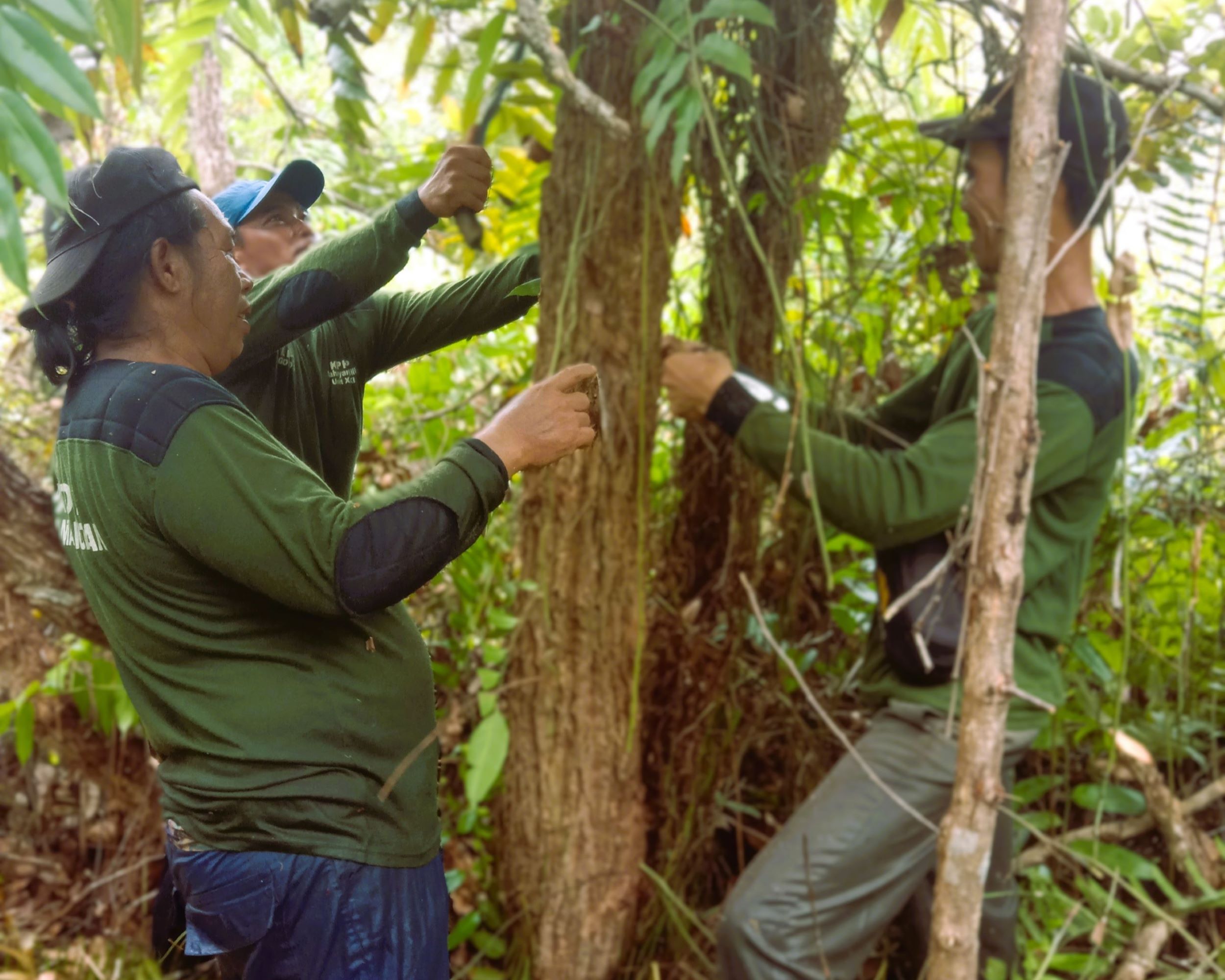
Tim Patroli Hutan LPHD Gohong tengah menginventaris kondisi pohon di Hutan Desa Gohong. Sumber Foto: KPSHK.
Hujan datang lebih cepat dan tidak menentu. Air masuk ke halaman dalam waktu singkat. Aktivitas berpindah ke perahu. Tidak lama kemudian air surut, lalu kembali berubah.
Kemarau juga berubah. Air sulit ditemukan. Sumur mengering. Tanah gambut kehilangan simpanan air. Permukaan tanah retak. “Air susah, tanah kering. Kami harus cari air lebih jauh,” kata Budi.
Perubahan ini memengaruhi cara warga bertani. Air bisa datang tiba-tiba lalu hilang dalam waktu singkat. Tanaman tidak sempat tumbuh dengan baik. “Sudah tanam, air naik. Setelah itu kering. Kami bingung harus mulai kapan,” kata Budi.
Perubahan iklim juga memperbesar risiko kebakaran. Gambut yang kering mudah terbakar. Api tidak selalu terlihat karena bergerak di bawah tanah. Asap muncul dari permukaan tanpa tanda awal. “Api ada di bawah tanah. Kami gali baru kelihatan,” kata Heron.
Saat kebakaran terjadi di Kebun Sawit pada Tahun 2025 di Gohong, dampaknya langsung terasa. Asap mengganggu aktivitas warga. Pemadaman membutuhkan waktu karena sumber air terbatas dan lokasi sulit dijangkau.
Kondisi ini menunjukkan satu hal yang sama: perubahan iklim hadir dalam kehidupan sehari-hari. Warga tidak tinggal diam. Bersama Tim Penjaga Hutan (TPH), langkah dilakukan untuk menahan dampak perubahan ini. Sekat kanal dibangun untuk menjaga air tetap berada di dalam gambut. Sumur bor disiapkan sebagai sumber air saat kemarau. Menara pantau digunakan untuk mendeteksi asap lebih awal. Radio komunikasi membantu tim patroli bergerak cepat saat titik api muncul.
Patroli rutin terus berjalan. Warga menyesuaikan waktu tanam dengan kondisi yang terus berubah. “Kami jaga hutan, jaga air, supaya tidak terbakar dan tanah tidak kering,” ujar Heron.
Krisis iklim tidak datang sebagai wacana. Perubahan terlihat dari air yang tidak menentu, tanah yang mengering, dan api yang muncul tanpa tanda. Warga di Desa Gohong menghadapinya setiap hari.
Penulis: Alma
Editor: Kiss & JW
The sound of a boat engine can be heard on the Kahayan River. A villager brings in his catch and stops beside a stilt house. The water is close to the floor of the house. When the water rises, the floor feels damp. When the water recedes, mud is visible beneath the house.
Gohong Village, Kahayan Hilir District, Pulang Pisau Regency, Central Kalimantan, lives with changes in the water level. “When the water changes, our work changes,” said Lampang.
The changes are no longer what they used to be. The river level rises and falls without a pattern. Residents still see water marks on the house pillars, but the old methods no longer help. “We used to know the time. Now we can’t,” said Lampang.
The Gohong LPHD Forest Patrol Team is taking inventory of the condition of the trees in the Gohong Village Forest. Photo Source: KPSHK.
The rain comes more quickly and erratically. Water enters the yard in a short time. Activities shift to boats. Shortly after, the water recedes, then changes again.
The dry season has also changed. Water is scarce. Wells dry up. The peat soil loses its water storage. The ground surface cracks. “Water is scarce, the land is dry. We have to look for water further away,” said Budi.
These changes affect the way residents farm. Water can come suddenly and then disappear just as quickly. Crops don’t have time to grow well. “We’ve planted, the water rises. Then it dries up. We’re confused about when to start,” said Budi.
Climate change also increases the risk of fires. Dry peat is flammable. Fires aren’t always visible because they move underground. Smoke rises from the surface without warning. “The fire is underground. We dig and then we see it,” said Heron.
When a fire broke out in a palm oil plantation in Gohong in 2025, the impact was immediate. The smoke disrupted residents’ activities. Extinguishing it took time because water sources were limited and the location was difficult to reach.
These conditions demonstrate one thing: climate change is present in everyday life. Residents are not standing still. Together with the Forest Guard Team (TPH), steps are being taken to mitigate the impacts of these changes. Canal blocks are being built to retain water in the peat. Boreholes are being prepared as water sources during the dry season. Monitoring towers are being used to detect smoke early. Radio communication helps patrol teams move quickly when fires appear.
Routine patrols continue. Residents adjust planting times to constantly changing conditions. “We protect the forest, protect the water, so it doesn’t burn and the land doesn’t dry out,” said Heron.
The climate crisis doesn’t just come from talk. Change is visible in the erratic water levels, drying soil, and fires that appear without warning. Residents of Gohong Village face this every day.
Writer: Alma
Editor: Kiss & JW
Add a Comment