
Suara motor perahu kecil memecah kesunyian kanal di Mantaren I, pada suatu pagi di bulan November. Air mengalir pelan di sepanjang saluran lurus peninggalan Proyek Lahan Gambut Sejuta Hektar tahun 1995 itu. Garis air yang tenang itu menyimpan kisah panjang tentang bagaimana sebuah wilayah bertahan dari bencana ekologis terbesar dalam sejarahnya. Kanal yang dulu digali untuk mengeringkan lahan agar mudah dibuka menjadi kebun dan ladang, justru menjadi awal dari rentetan kebakaran berulang yang menghancurkan ekosistem gambut Kahayan Hilir.
Ketika gambut kehilangan airnya, ia berubah menjadi bahan bakar raksasa. Api yang menyala tidak hanya membakar pohon dan semak di permukaan, tetapi menembus ke kedalaman, memakan lapisan organik yang terbentuk selama ribuan tahun. Kebakaran hebat 2015 membuktikan betapa rentannya tanah tanpa air. Asap berbulan-bulan menutup langit, memutus aktivitas ekonomi, dan menyeret masyarakat ke dalam masa paling gelap dalam sejarah wilayah itu. “Kalau gambut kering, api datang seperti musuh tak terlihat,” kenang Pirit, Ketua LPHD Mantaren I, menatap kanal yang mengalir tenang.
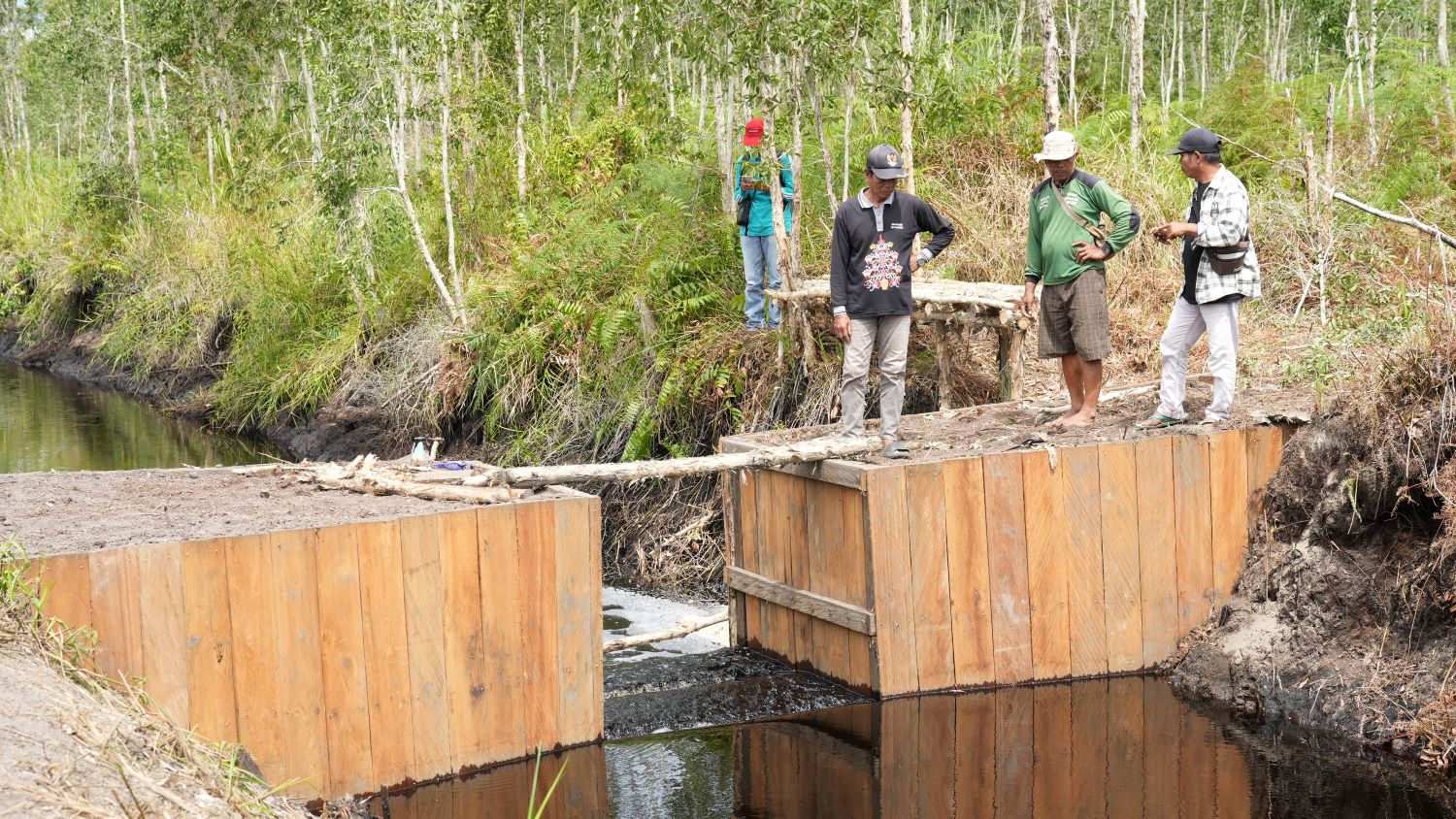
Pengecekan Sekat Kanal di Sei Sala Mantaren I. Sumber foto: KPSHK.
Dari pengalaman pahit itu lahirlah komitmen baru untuk menjaga air tetap tinggal di dalam tubuh gambut. Sekat kanal atau tabat dalam istilah lokal, menjadi salah satu strategi paling penting sebagai upaya pemulihan. Bangunan sederhana yang tampak seperti dinding kayu atau papan blokade air ini bekerja sebagai penahan aliran, memperlambat pelepasan air, dan membantu mengisi kembali kubah gambut yang selama bertahun-tahun mengering. Bentuknya sederhana, tetapi fungsi ekologinya sangat besar. Ketika air kembali mengisi lapisan dalam gambut, kelembapan tanah terpelihara, suhu permukaan menurun, dan risiko kebakaran menyusut drastis.
Pembangunan tabat di Kahayan Hilir melibatkan masyarakat secara langsung. Warga desa, tim penjaga hutan, dan LPHD turun ke lapangan, mengukur tinggi air, menentukan titik strategis, dan memasang struktur penahan. Semua dilakukan dengan kekuatan tangan dan semangat kolektif. “Sekat kanal bukan hanya bangunan. Ini simbol bahwa kami tidak mau tanah ini terbakar lagi,” ujar seorang anggota Tim Penjaga Hutan Gohong sambil menunjuk papan ulin yang baru dipasang. Setiap sekat yang berdiri menjadi tanda bahwa masyarakat telah mengambil kembali kendali atas air yang dulu hilang.
Seiring berjalannya waktu, perubahan terlihat nyata. Lahan yang sebelumnya retak dan berdebu kini mulai tergenang kembali. Rumput rawa tumbuh di pinggir air, semai belangeran dan pulai berdiri rapuh tetapi tegar. Burung-burung kecil kembali hinggap di pucuk pohon muda. Air yang tertahan di kanal menyebar perlahan ke hamparan gambut di sekitarnya, mengembalikan kehidupan yang lama hilang. Abdul Azis tersenyum ketika melihat hamparan hijau baru itu. “Ini pekerjaan sunyi,” katanya. “Orang mungkin tidak melihat hasilnya sekarang, tapi setiap tetes air yang tertahan adalah investasi untuk masa depan.”
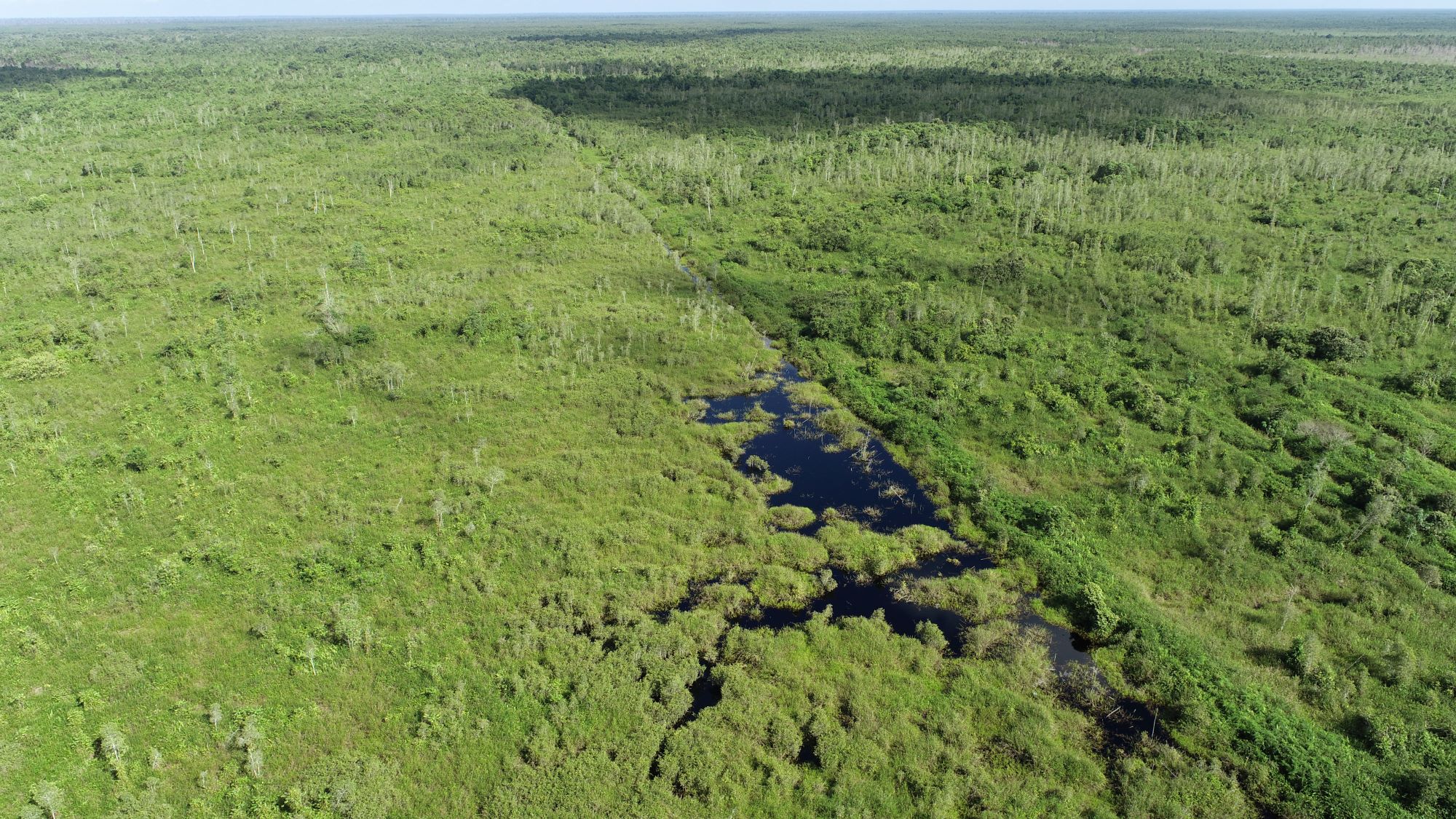
Hutan Desa Mantaren I. Sumber foto: KPSHK.
Tabat juga mengubah cara pandang masyarakat terhadap lahan gambut. Jika dulu air dianggap musuh yang harus dibuang agar lahan dapat ditanami, kini air dipandang sebagai penjaga kehidupan. Dalam budaya Dayak Ngaju, air dan tanah adalah dua saudara yang tidak boleh dipisahkan. Ketika air hilang, tanah mati. Ketika air kembali, kehidupan lahir kembali. Filosofi itu menemukan wujudnya pada struktur kayu sederhana yang tegak berdiri di tengah kanal yang dingin dan berkabut.
Tidak ada teknologi modern yang lebih efektif daripada kebijaksanaan sederhana yang dilakukan secara konsisten. Tidak ada mesin besar yang lebih kuat daripada tangan masyarakat yang bekerja bersama. Tidak ada kebijakan yang lebih berhasil daripada keyakinan bersama bahwa hutan harus dijaga. Tabat mungkin tampak kecil di atas peta, tetapi ia menjadi benteng pertama yang melindungi gambut dari api, menyelamatkan udara dari asap, dan menjaga masa depan dari kehancuran.
Upaya menjaga air di dalam tubuh gambut bukan pekerjaan selesai dalam satu musim. Ia memerlukan pengawasan berulang, pemeliharaan berkala, dan komitmen jangka panjang. Selama masyarakat terus menjaga tabat dengan hati, harapan tidak akan padam.
Penulis: Alma
The sound of a small boat motor shattered the silence of the Mantaren I canal on a November morning. Water flowed gently along the straight channel left behind by the 1995 One Million Hectare Peatland Project. This tranquil waterline holds a long story of how a region survived the greatest ecological disaster in its history. The canal, once dug to drain the land for gardens and fields, instead became the beginning of a series of recurring fires that devastated the Kahayan Hilir peat ecosystem.
When peat loses its water, it turns into a giant fuel. The flames not only burn the trees and bushes on the surface but also penetrate deeper, consuming the organic layers that have formed over thousands of years. The devastating fires of 2015 demonstrated how vulnerable the land is without water. Months of smoke obscured the sky, disrupting economic activity, and plunging the community into the darkest period in the region’s history. “When the peat dries out, fire comes like an invisible enemy,” recalled Pirit, Head of the Mantaren I Forest Management Agency (LPHD), gazing at the peaceful flow of the canal.
Inspection of the Canal Block in Sei Sala Mantaren I. Photo source: KPSHK.
From that bitter experience, a new commitment was born to keep water within the peatland. Canal blocks, or tabat as they are locally known, have become one of the most important strategies in the restoration effort. These simple structures, which resemble wooden walls or water block boards, act as flow barriers, slowing water release, and helping to replenish the peat dome that has dried out over years. Their form is simple, but their ecological function is profound. When water returns to the peat, soil moisture is maintained, surface temperatures decrease, and the risk of fire is drastically reduced.
The construction of the tabat in Kahayan Hilir directly involved the community. Villagers, forest rangers, and the Forest Management Agency (LPHD) went into the field, measuring water levels, determining strategic points, and installing the retaining structures. All of this was done with the strength of their hands and collective spirit. “Canal blocks are not just structures. They are symbols that we don’t want this land to burn again,” said a member of the Gohong Forest Ranger Team, pointing to the newly installed ironwood planks. Each standing barrier signifies that the community has regained control over the water they once lost.
Over time, changes are evident. Land that was once cracked and dusty is now beginning to resurface. Swamp grass grows along the water’s edge, and belangeran and pulai seedlings stand fragile but resilient. Small birds return to perch on the tops of young trees. The water retained in the canal slowly spreads into the surrounding peatlands, restoring long-lost life. Abdul Azis smiles as he looks at the new green expanse. “This is silent work,” he says. “People may not see the results now, but every drop of retained water is an investment for the future.”
Mantaren I Village Forest. Photo source: KPSHK.
Tabat has also changed the community’s perspective on peatlands. While water was once considered an enemy that had to be removed to allow for cultivation, it is now seen as the guardian of life. In Ngaju Dayak culture, water and land are two inseparable siblings. When water disappears, the land dies. When water returns, life is reborn. This philosophy finds its expression in a simple wooden structure standing upright in the middle of a cool, misty canal.
No modern technology is more effective than simple wisdom consistently implemented. No large machine is more powerful than the hands of a community working together. No policy is more successful than a shared belief that the forest must be protected. The tabat may appear small on the map, but it is the first line of defense protecting the peat from fire, protecting the air from smoke, and safeguarding the future from destruction.
The effort to preserve water within the peat is not a one-season task. It requires repeated monitoring, regular maintenance, and long-term commitment. As long as the community continues to guard the tabat with all its heart, hope will not be extinguished.
Author: Alma
Add a Comment