
Di tengah operasi penanganan kebakaran hutan dan lahan (karhutla) di Kabupaten Pulang Pisau, Kalimantan Tengah, perhatian Tim Darurat Karhutla (TDK) tidak hanya tertuju pada titik api. Kondisi orang-orang yang berada di lapangan juga harus dipastikan tetap aman.
Bagi personel TDK, menghadapi api berarti berhadapan dengan panas, asap, medan yang sulit, dan aktivitas fisik yang menguras tenaga. Karena itu, sebelum berangkat ke lapangan dan setelah kembali dari operasi, ada satu kegiatan yang tidak boleh dilewatkan: pemeriksaan kesehatan.
Pemeriksaan dilakukan pada pagi hari sebelum personel bertugas dan sore hari setelah kegiatan berakhir. Rutinitas ini membantu tenaga kesehatan memantau kondisi personel, mengenali keluhan, dan menentukan apakah mereka siap melanjutkan operasi atau membutuhkan waktu untuk beristirahat.
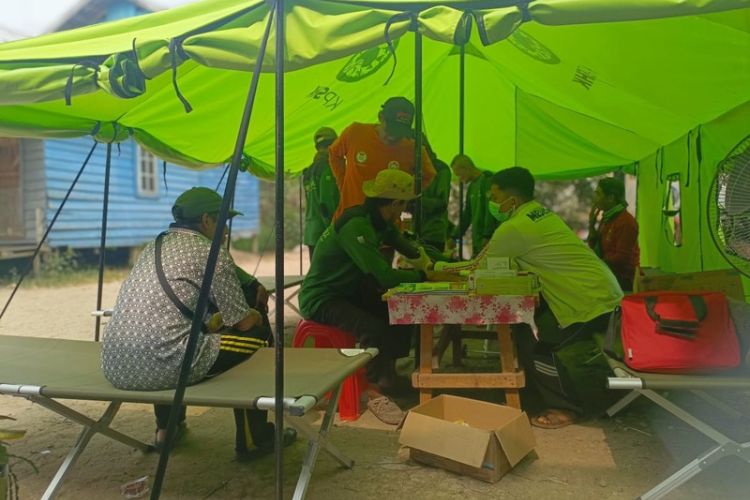
Pemerikasaan kesehatan tim TDK di posko. (KPSHK, 2026).
Andi Hermawan, Penanggung Jawab Logistik dan Kesehatan Personel TDK, menjelaskan bahwa pemeriksaan kesehatan merupakan bagian penting untuk menjaga kesiapan tim selama penanganan karhutla. “Tujuan utama pemeriksaan kesehatan adalah memastikan personel tetap sehat, bugar, dan aman agar dapat menjalankan tugas pemadaman secara optimal,” jelas Andi.
Memastikan Kondisi Sebelum Bertugas
Pemeriksaan kesehatan bukan sekadar rutinitas sebelum dan sesudah operasi. Di tengah kondisi lapangan yang penuh risiko, pemeriksaan membantu tim mengetahui kondisi tubuh personel sebelum mereka kembali menghadapi api.
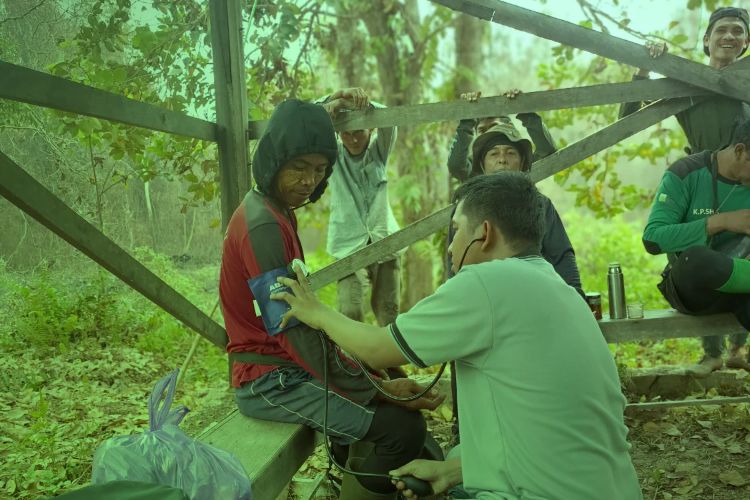
Pemeriksaan kesehatan tim TDK sebelum melakukan pemadaman Karhutla. (KPSHK, 2026)
Tenaga kesehatan memeriksa tekanan darah, kolesterol, asam urat, serta keluhan yang dirasakan personel. Berdasarkan hasil pemeriksaan, tenaga kesehatan dapat memberikan penanganan awal dan obat sesuai kebutuhan. Jika diperlukan, personel akan dirujuk ke puskesmas atau rumah sakit terdekat dengan pendampingan tim logistik.
Risiko yang dihadapi personel beragam, mulai dari kelelahan fisik dan mental, gangguan pernapasan akibat asap, iritasi mata dan kulit, hingga cedera. Keluhan seperti batuk, pusing, mual, sesak napas, dan nyeri dada perlu segera disampaikan agar mendapatkan penanganan.
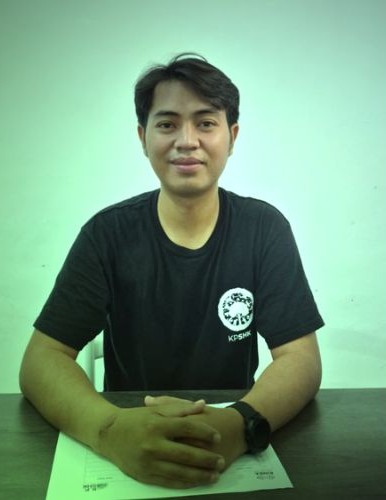
Andi Hermawan, Unit TDK Logistik dan Kesehatan KPHSK. (KPSHK, 2026).
Andi menjelaskan bahwa personel yang belum pulih tidak boleh memaksakan diri untuk kembali bertugas. “Jika hasil pemeriksaan ulang menunjukkan kondisi personel belum memungkinkan untuk turun ke lapangan, kami bersama tenaga kesehatan menyarankan agar personel beristirahat terlebih dahulu untuk pemulihan,” ujarnya.
Keputusan untuk beristirahat menjadi bagian penting dari keselamatan kerja. Dalam operasi karhutla, kemampuan untuk terus bekerja tidak selalu berarti tubuh berada dalam kondisi yang cukup baik untuk menghadapi risiko berikutnya.
Mukhlis, Memantau Kondisi Mereka yang Bertugas
Di empat desa program Inisiatif Kahayan Hilir (IKH) Buntoi, Gohong, Mantaren I, dan Kalawa tenaga kesehatan turut mendukung kesiapan personel TDK. Mukhlis menjadi salah satu tenaga kesehatan yang bertugas memeriksa kondisi personel di empat desa tersebut.
Pemeriksaan sebelum dan sesudah operasi memberikan kesempatan bagi personel untuk menyampaikan keluhan yang mungkin muncul setelah beraktivitas di lapangan. Dari pemeriksaan tersebut, tenaga kesehatan dapat menilai kondisi personel dan menentukan penanganan yang diperlukan.
Bagi Mukhlis, pemeriksaan kesehatan menjadi bagian dari upaya memastikan personel tidak mengabaikan kondisi tubuh ketika menjalankan tugas penanganan karhutla. “Pemeriksaan ini penting untuk mengetahui kondisi personel sebelum dan setelah bertugas. Kalau ada keluhan, kami bisa segera melakukan pemeriksaan dan memberikan penanganan sesuai kondisi mereka,” ujar Mukhlis.
Peran tenaga kesehatan bukan hanya menangani personel yang jatuh sakit. Mereka juga membantu memastikan personel yang kembali ke lapangan berada dalam kondisi yang memungkinkan untuk bertugas dengan aman.
Suhartono, Memastikan Tubuh Siap Kembali Bertugas
Bagi Suhartono, personel TDK Kalawa, pemeriksaan kesehatan telah menjadi bagian dari rangkaian kegiatan penanganan karhutla. Ia rutin mengikuti pemeriksaan sebelum berangkat dan setelah kembali dari operasi.
Kebiasaan tersebut penting karena kondisi tubuh dapat berubah setelah seseorang bekerja di tengah panas, asap, dan aktivitas fisik yang berat. Pemeriksaan memberikan kesempatan untuk mengetahui kondisi kesehatan sekaligus menyampaikan keluhan sebelum kembali bertugas. “Pemeriksaan sebelum dan sesudah bertugas penting bagi kami. Jadi, kondisi tubuh bisa diketahui dan kalau ada keluhan bisa segera disampaikan kepada tenaga kesehatan,” kata Suhartono.
Pengalaman Suhartono memperlihatkan bahwa kesiapan menghadapi karhutla tidak hanya berkaitan dengan peralatan dan kemampuan memadamkan api. Kesadaran untuk memeriksa kondisi tubuh dan melaporkan keluhan juga merupakan bagian dari tanggung jawab setiap personel.
Menjaga Keselamatan di Garis Depan
Menjaga kesehatan personel membutuhkan dukungan tenaga kesehatan sekaligus kedisiplinan setiap anggota tim. Penggunaan alat pelindung diri (APD) yang sesuai, istirahat cukup, rotasi kerja, dan konsumsi air secara teratur menjadi bagian dari upaya mengurangi risiko selama operasi.
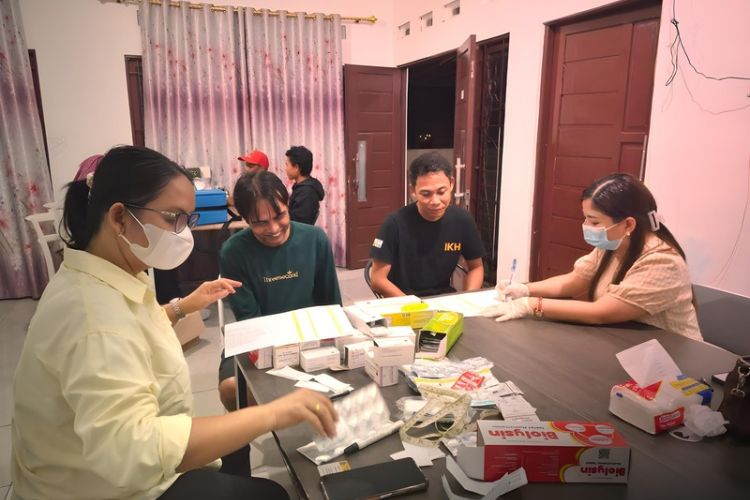
Pemeriksaan Kesehatan TDK pada malam hari di PISL Mantaren I. (KPSHK, 2026).
Andi mengingatkan personel agar tidak mengabaikan keluhan kesehatan, terutama ketika mengalami pusing berat, sesak napas, nyeri dada, atau kelemahan mendadak. “Kesehatan Anda adalah modal utama misi ini. Api bisa dipadamkan, tetapi tubuh yang rusak karena dipaksakan tidak mudah dipulihkan. Tetap utamakan keselamatan,” pesannya.
Pemeriksaan kesehatan mungkin hanya berlangsung beberapa saat sebelum personel berangkat atau setelah mereka kembali. Namun, rutinitas ini memiliki arti penting bagi keselamatan seluruh tim. Di tengah upaya melindungi desa dari ancaman karhutla, memastikan personel tetap sehat merupakan bagian dari upaya menjaga mereka yang berada di garis depan.
Penulis: Alma
Amidst forest and land fire (karhutla) response operations in Pulang Pisau Regency, Central Kalimantan, the Forest and Land Fire Emergency Team (TDK) focuses on more than just the hotspots; they must also ensure the safety and well-being of the personnel in the field.
For TDK members, confronting fires means contending with intense heat, smoke, challenging terrain, and physically exhausting labor. Consequently, both before heading into the field and upon returning from operations, one essential step cannot be skipped: a health check-up.
These checks are conducted in the morning before personnel begin their duties and again in the evening once operations conclude. This routine allows medical staff to monitor the personnel’s condition, identify any health concerns, and determine whether they are fit to continue operations or require time to rest.
Health check of the TDK team at the command post. (KPSHK, 2026).
Andi Hermawan, the TDK’s Logistics and Personnel Health Coordinator, explains that health screenings are vital for maintaining the team’s readiness during fire response efforts. “The primary goal of these health checks is to ensure that personnel remain healthy, fit, and safe, enabling them to carry out firefighting duties optimally,” Andi explains.
Assessing Condition Before Duty
Health screenings are more than just a routine procedure; given the high-risk nature of the field environment, they help the team assess the physical state of personnel before they return to face the fires.
Health screening of the TDK team prior to conducting forest and land fire suppression operations. (KPSHK, 2026).
Medical staff check vital signs such as blood pressure, as well as cholesterol and uric acid levels, while also inquiring about any symptoms or discomfort the personnel may be experiencing. Based on these findings, medical staff can provide initial care and necessary medication. If required, personnel may be referred to a nearby community health center (puskesmas) or hospital, with assistance provided by the logistics team.
Personnel face a variety of risks, ranging from physical and mental exhaustion, respiratory issues caused by smoke, and eye or skin irritation, to physical injuries. Symptoms such as coughing, dizziness, nausea, shortness of breath, or chest pain must be reported immediately to ensure prompt medical attention.
Andi Hermawan, TDK Logistics and Health Unit, KPHSK. (KPSHK, 2026).
Andi emphasizes that personnel who have not yet fully recovered must not push themselves to return to duty. “If a follow-up examination indicates that a team member is not yet fit to head into the field, we—in consultation with medical personnel—advise them to take some time off to recover,” he said.
The decision to rest is a crucial aspect of workplace safety. In forest and land fire (karhutla) operations, the mere ability to keep working does not necessarily mean that one’s body is in a condition suitable for facing subsequent risks.
Mukhlis: Monitoring the Condition of Those on Duty
In the four villages covered by the Kahayan Hilir Initiative (IKH)—Buntoi, Gohong, Mantaren I, and Kalawa—medical personnel play a key role in ensuring the readiness of the TDK (Forest and Land Fire Response Team) members. Mukhlis is one of the healthcare workers tasked with assessing the condition of team members in these villages.
Examinations conducted before and after operations provide an opportunity for team members to report any health issues that may have arisen during their time in the field. Based on these assessments, medical personnel can evaluate the individual’s condition and determine the appropriate course of action.
For Mukhlis, these health checks are a vital measure to ensure that team members do not neglect their physical well-being while carrying out fire-response duties. “These checks are essential for gauging the condition of our personnel both before and after their shifts. If someone reports an issue, we can immediately conduct an examination and provide care tailored to their specific needs,” Mukhlis explained.
The role of medical personnel extends beyond treating those who fall ill; they also help ensure that anyone returning to the field is in a physical state that allows them to perform their duties safely.
Suhartono: Ensuring Physical Readiness for Duty
For Suhartono, a member of the TDK team in Kalawa, health screenings have become an integral part of the fire-response process. He consistently undergoes these checks both before heading out and upon returning from an operation.
This routine is important because one’s physical condition can change significantly after working amidst heat, smoke, and strenuous physical activity. The examinations provide an opportunity to assess health status and voice any concerns before returning to duty. “These pre- and post-duty checks are vital for us. They allow us to keep track of our physical condition, and if any issues arise, we can immediately bring them to the attention of the medical staff,” says Suhartono. Suhartono’s experience demonstrates that preparedness for forest and land fires is not solely a matter of equipment and firefighting skills. Being mindful of one’s own physical condition and reporting any health concerns are also part of every individual’s responsibility.
Ensuring Safety on the Front Lines
Maintaining the health of personnel requires both the support of medical staff and the discipline of every team member. The use of appropriate personal protective equipment (PPE), sufficient rest, work rotation, and regular water intake are all essential measures for reducing risks during operations.
Health check of TDK (proboscis monkeys) at night at PISL Mantaren I. (KPSHK, 2026).
Andi reminds personnel not to ignore health concerns—especially symptoms such as severe dizziness, shortness of breath, chest pain, or sudden weakness. “Your health is the primary asset for this mission. Fires can be extinguished, but a body damaged by being pushed beyond its limits is not easily restored. Always prioritize safety,” he urges.
Health screenings may only take a few moments—conducted either before personnel depart or upon their return—yet this routine is vital to the safety of the entire team. In the effort to protect villages from the threat of forest and land fires, ensuring that personnel remain healthy is a crucial part of safeguarding those on the front lines.
Author: Alma
Add a Comment