
Bekerja di lokasi kebakaran hutan bukan hal mudah. Mata perih karena asap, tubuh lemas karena panas, dan keringat mengalir tanpa henti. Situasi ini sudah menjadi bagian dari keseharian Tim Penjaga Hutan (TPH) empat desa di Kahayan Hilir, Kalimantan Tengah.
Musim kemarau membuat tinggi muka air gambut turun dan lahan semakin kering. Api lebih mudah muncul dan cepat menyebar. Tim harus bergerak cepat. Perjalanan menuju titik api ditempuh dengan perahu menyusuri kanal dan sungai kecil, lalu dilanjutkan berjalan kaki di atas gambut yang lunak dan tidak rata.
Suhartono, anggota TPH Kalawa, mengenang kebakaran hutan Tahun 2023. Panas saat itu terasa seperti berdiri di depan tungku besar. Napas berat, masker basah oleh keringat, dan jarak pandang terbatas karena asap. Kondisi seperti ini menyimpan risiko jika tidak diantisipasi dengan baik.
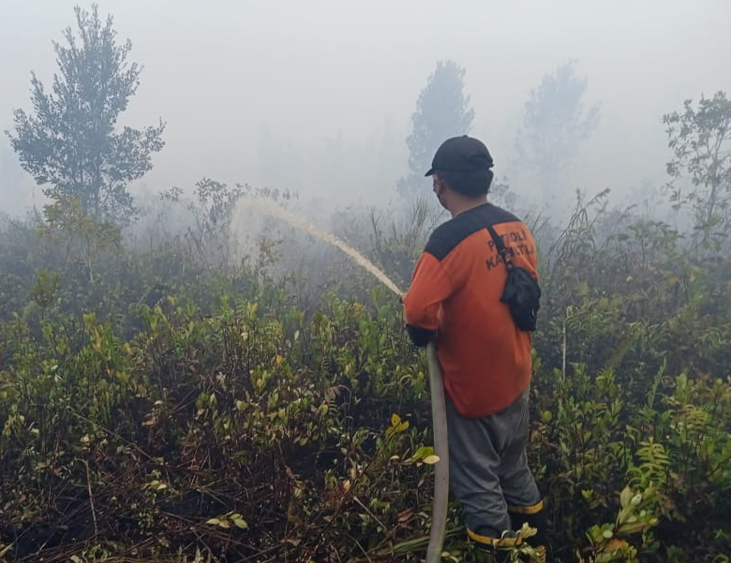 Pencegahan Karhutla Tim Patroli Kebakaran. Sumber Foto: KPSHK.
Tubuh manusia memiliki batas. Paparan panas dan api yang menyala membuat suhu tubuh naik cepat. Kurang minum dan kurang istirahat dapat memicu gangguan kesehatan serius.

Prof. Dr. Efi Yuliati Yovi, M.Life.Env.Sc., Tenaga Ahli K3 KPSHK.
Prof. Dr. Efi Yuliati Yovi, M.Life.Env.Sc., tenaga ahli K3 KPSHK, menjelaskan bahwa paparan panas berlebihan dapat menyebabkan hipertermia, yaitu kondisi ketika suhu tubuh meningkat terlalu tinggi dan tidak bisa lagi turun secara normal. Paparan panas yang berlangsung lama tanpa istirahat dan cairan cukup juga dapat memicu heat exhaustion atau kelelahan akibat panas. Jika tidak segera ditangani, kondisi ini bisa berkembang menjadi heat stroke, yaitu keadaan darurat ketika suhu tubuh sangat tinggi dan seseorang berisiko kehilangan kesadaran.
Pengalaman kebakaran tersebut membuktikan bahwa hal itu bukan sekadar teori. Armidin, anggota TPH Buntoi, pernah merasa sangat pusing dan hampir pingsan saat proses pendinginan lahan atau cooling down. Tim segera menghentikan pekerjaan, membawanya ke tempat teduh, dan memastikan ia minum cukup air. Tindakan cepat tersebut mencegah kondisi menjadi lebih parah.
Tanda tubuh kepanasan sebenarnya jelas: haus berlebihan, pusing, kram otot, dan lelah yang tidak biasa. Gejala ini tidak boleh diabaikan.
Asap membawa risiko tambahan. Selain mengurangi jarak pandang, asap kebakaran hutan mengandung partikel halus dan gas berbahaya yang dapat mengganggu pernapasan. Tenggorokan kering, batuk, sesak napas, hingga mata perih sering dirasakan setelah beberapa jam bekerja.
Karena itu, penerapan K3 saat menghadapi asap sangat penting. Tim wajib menggunakan masker respirator (minimal tipe N95 atau setara) yang mampu menyaring partikel halus, bukan sekadar masker kain biasa. Masker harus terpasang rapat menutup hidung dan mulut, serta diganti secara berkala atau ketika sudah lembap dan kotor agar tetap efektif. Selain itu, penggunaan kacamata pelindung membantu mengurangi iritasi mata, dan pekerja perlu melakukan rotasi kerja agar paparan asap tidak terlalu lama dalam satu waktu.
Prof. Efi menegaskan bahwa K3 bukan hanya soal kecelakaan besar. Gangguan kecil yang diabaikan dapat berkembang menjadi masalah serius.
Pengalaman lapangan membuat TPH semakin disiplin menerapkan K3. Persediaan air minum dipastikan cukup sebelum berangkat. Waktu istirahat diatur bergantian. Safety talk dilakukan sebelum patroli atau pemadaman untuk membahas kondisi cuaca, pembagian tugas, dan jalur evakuasi.
Komunikasi menjadi kunci. Setiap anggota tim saling memperhatikan kondisi rekannya. Pekerjaan dihentikan sementara jika ada yang terlihat terlalu lelah.
TPH bertugas melindungi hutan dan masyarakat Kahayan Hilir dari kebakaran. Kesehatan dan keselamatan mereka harus menjadi prioritas. Tubuh yang terjaga membuat tugas bisa terus berjalan dan setiap anggota tim dapat kembali ke rumah dalam keadaan selamat.
Penulis: Alma
Editor: JW & Kiss
Working at forest fire sites is no easy feat. Eyes sting from the smoke, bodies feel weak from the heat, and sweat pours nonstop. These conditions have become part of the daily routine of the Forest Ranger Team (TPH) from four villages in Kahayan Hilir, Central Kalimantan.
The dry season causes the peatland water level to drop and the land to become drier. Fires start and spread more easily. The team must move quickly. Travel to the fire hotspots involves boating along canals and small rivers, followed by walking on soft, uneven peat.
Suhartono, a member of the Kalawa TPH, recalls the 2023 forest fires. The heat felt like standing in front of a large furnace. Breathing was labored, masks were soaked with sweat, and visibility was limited by the smoke. Conditions like these pose risks if not properly managed.
Forest and Land Fire Prevention by the Fire Patrol Team. Photo Source: KPSHK.
The human body has limits. Exposure to heat and burning fires causes body temperature to rise rapidly. Not drinking enough water and getting enough rest can trigger serious health problems.
Prof. Dr. Efi Yuliati Yovi, M.Life.Env.Sc., KPSHK Occupational Health and Safety Expert.
Prof. Dr. Efi Yuliati Yovi, M.Life.Env.Sc., KPSHK Occupational Health and Safety Expert, explained that excessive heat exposure can cause hyperthermia, a condition where body temperature rises too high and cannot be reduced normally. Prolonged heat exposure without adequate rest and fluids can also trigger heat exhaustion. If not treated promptly, this condition can develop into heat stroke, an emergency when the body temperature is so high that a person is at risk of losing consciousness.
The experience of the fire proved that this is not just a theory. Armidin, a member of the Buntoi Firefighting Team (TPH), once felt extremely dizzy and nearly fainted during the cooling down process. The team immediately stopped work, took him to a shaded area, and ensured he drank enough water. This quick action prevented the condition from worsening.
The signs of overheating are clear: excessive thirst, dizziness, muscle cramps, and unusual fatigue. These symptoms should not be ignored.
Smoke carries additional risks. Besides reducing visibility, forest fire smoke contains fine particles and hazardous gases that can interfere with breathing. Dry throats, coughing, shortness of breath, and even sore eyes are often experienced after several hours of work.
Therefore, implementing OHS (Occupational Health and Safety) when dealing with smoke is crucial. Teams are required to wear respirator masks (at least N95 type or equivalent) that can filter fine particles, not just ordinary cloth masks. Masks must fit tightly over the nose and mouth and be replaced regularly or when they become damp or dirty to remain effective. Furthermore, the use of protective eyewear helps reduce eye irritation, and workers need to rotate jobs to avoid prolonged exposure to smoke.
Prof. Efi emphasized that OHS is not just about major accidents. Small, ignored disturbances can develop into serious problems.
Field experience has made TPH increasingly disciplined in implementing OHS. Adequate drinking water supplies are ensured before departure. Break times are staggered. Safety talks are held before patrols or firefighting operations to discuss weather conditions, task allocation, and evacuation routes.
Communication is key. Each team member monitors the condition of their colleagues. Work is temporarily halted if anyone appears overly tired.
The TPH is tasked with protecting the forests and communities of Kahayan Hilir from fires. Their health and safety must be a priority. A healthy body ensures the task can continue and every team member can return home safely.
Writer: Alma
Editor: JW & Kiss
Add a Comment