Pulang Pisau, Kalimantan Tengah — Keberhasilan perhutanan sosial tidak cukup diukur dari luas kawasan yang dikelola atau terbentuknya kelompok usaha masyarakat. Lebih dari itu, keberhasilan ditentukan oleh kemampuan masyarakat membangun kelembagaan yang kuat, menjaga kelestarian hutan, dan mengembangkan sumber penghidupan secara berkelanjutan.
Hal tersebut menjadi perhatian dalam penguatan tiga Lembaga Pengelola Hutan Desa (LPHD) di Kecamatan Kahayan Hilir, Kabupaten Pulang Pisau, yaitu Gohong, Kalawa, dan Mantaren I. Ketiganya memiliki tanggung jawab untuk memastikan hutan desa tidak hanya terlindungi, tetapi juga memberikan manfaat nyata bagi masyarakat.
Kelembagaan Kuat, Pengelolaan Lebih Berkelanjutan
LPHD merupakan ujung tombak pengelolaan hutan desa. Perannya tidak sebatas mengatur pemanfaatan kawasan, tetapi juga memastikan masyarakat terlibat dalam pengambilan keputusan dan memiliki tanggung jawab bersama terhadap kelestarian hutan.
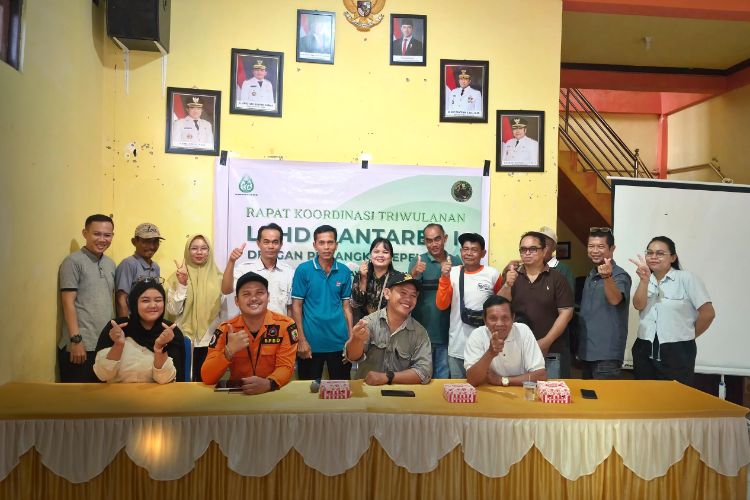
LPHD Mantaren I. Sumber foto: KPSHK, November 2026.
Tantangan yang dihadapi bukan hanya persoalan teknis pengelolaan kawasan, melainkan bagaimana memastikan organisasi berjalan efektif, pembagian peran antarpengurus jelas, dan masyarakat memiliki ruang untuk berpartisipasi. Keterlibatan pemerintah desa, BPD, mantir adat, perwakilan RT, kelompok usaha, dan masyarakat menjadi fondasi penting bagi tata kelola yang transparan dan akuntabel. “Pengelolaan hutan desa membutuhkan keterlibatan seluruh masyarakat. LPHD tidak bisa bekerja sendiri karena menjaga hutan merupakan tanggung jawab bersama,” Jelas Pirit Sinar, Ketua LPHD Mantaren I.
Penguatan kelembagaan juga perlu diikuti dengan peningkatan kemandirian. LPHD diharapkan mampu menyusun prioritas, mengambil keputusan, membangun kemitraan, serta mempertanggungjawabkan pengelolaan kawasan kepada masyarakat.
Menjaga Hutan sekaligus Mengembangkan Ekonomi
Perlindungan hutan dan peningkatan kesejahteraan masyarakat merupakan dua hal yang tidak dapat dipisahkan. Pengembangan Kelompok Usaha Perhutanan Sosial (KUPS) menjadi salah satu upaya untuk membangun sumber penghidupan yang sejalan dengan kelestarian hutan.
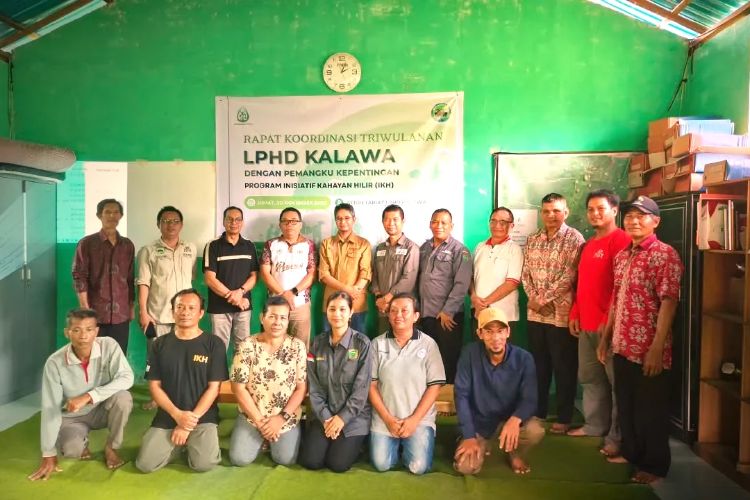
LPHD Kalawa. Sumber foto: KPSHK November 2026.
Di Gohong, Kalawa, dan Mantaren I, potensi usaha masyarakat meliputi agroforestri, madu kelulut, kerajinan rotan, ekowisata, karet, dan perikanan. Potensi tersebut perlu dikembangkan menjadi usaha yang produktif, memiliki pasar, dan memberikan manfaat ekonomi bagi anggota maupun masyarakat desa.
Ke depan, penguatan KUPS perlu diarahkan pada peningkatan kapasitas pengelolaan usaha, kualitas produk, pengembangan jaringan pemasaran, serta kemitraan dengan berbagai pihak. Dengan demikian, pemanfaatan hutan tidak berhenti pada kegiatan produksi, tetapi mampu menciptakan nilai tambah bagi masyarakat tanpa mengabaikan fungsi ekologis kawasan.
Kolaborasi Harus Menghasilkan Dukungan Nyata
Kemandirian LPHD bukan berarti bekerja sendiri. Dukungan KPH Kahayan Hilir, pemerintah desa, pemerintah daerah, dan pemangku kepentingan lainnya tetap dibutuhkan untuk memastikan pengelolaan hutan desa berjalan sesuai ketentuan dan kebutuhan masyarakat. “LPHD harus mampu menjaga keseimbangan antara pemanfaatan hutan dan perlindungan kawasan. Sinergi dengan masyarakat dan para pihak menjadi kunci keberlanjutannya,” Ungkap Ridwan, Perwakilan KPHP Kahayan Hilir.
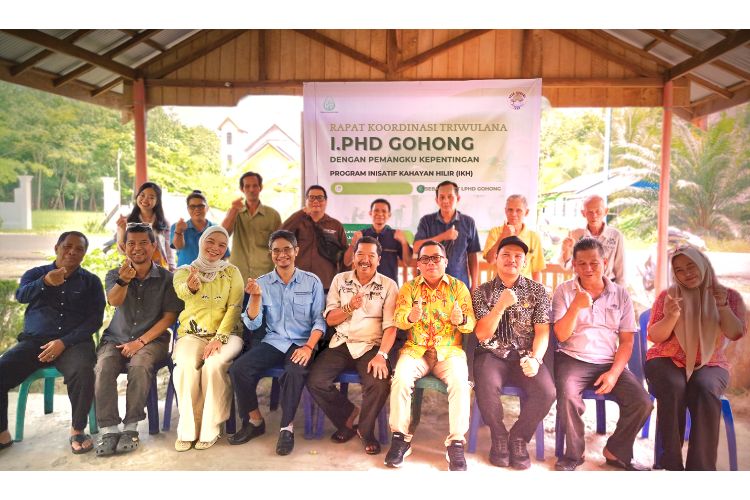
LPHD Gohong. Sumber foto: KPSHK November 2026.
Kolaborasi tersebut perlu diterjemahkan menjadi tindak lanjut yang jelas. LPHD perlu memperkuat koordinasi dengan pemerintah desa dan KPH, meningkatkan keterlibatan masyarakat dalam perlindungan kawasan, serta menyelaraskan rencana kerja kelembagaan dengan pengembangan KUPS.
Dari Evaluasi Menuju Kemandirian
Penguatan kelembagaan LPHD Gohong, Kalawa, dan Mantaren I juga diarahkan pada evaluasi kapasitas organisasi. Evaluasi ini menjadi dasar untuk mengidentifikasi aspek yang telah berjalan baik dan bagian yang masih membutuhkan perbaikan, mulai dari tata kelola organisasi, kapasitas sumber daya manusia, pengelolaan kawasan, hingga pengembangan usaha masyarakat. “LPHD yang kuat bukan hanya memiliki struktur organisasi, tetapi mampu menjalankan fungsi pengelolaan secara mandiri, transparan, dan berkelanjutan,” Ujar Rokhmond Onasis (Institution & Economic Manager KPSHK)
Tindak lanjutnya adalah mendorong setiap LPHD menyusun prioritas penguatan berdasarkan kebutuhan masing-masing. Pembenahan tata kelola, penguatan fungsi pengurus dan kelompok masyarakat, peningkatan kapasitas KUPS, serta perluasan kemitraan perlu menjadi bagian dari rencana kerja berikutnya. Dukungan para pemangku kepentingan juga perlu diarahkan pada kebutuhan konkret, bukan sekadar koordinasi rutin.
Pada akhirnya, masa depan hutan desa sangat ditentukan oleh kapasitas masyarakat yang mengelolanya. LPHD yang kuat, KUPS yang produktif, dan kolaborasi yang berjalan nyata menjadi fondasi untuk menjaga keseimbangan antara kelestarian ekosistem gambut dan kesejahteraan masyarakat.
Hutan desa bukan sekadar kawasan yang diberikan untuk dikelola, melainkan tanggung jawab bersama yang harus dijaga dan diwariskan kepada generasi berikutnya.
Pulang Pisau, Central Kalimantan — The success of social forestry cannot be measured solely by the size of the managed area or the formation of community business groups. More importantly, success is determined by the community’s ability to build robust institutions, safeguard forest sustainability, and develop sustainable livelihoods.
This focus lies at the heart of efforts to strengthen three Village Forest Management Institutions (LPHD) in Kahayan Hilir District, Pulang Pisau Regency—specifically in the villages of Gohong, Kalawa, and Mantaren I. Each of these institutions is tasked with ensuring that the village forest is not only protected but also provides tangible benefits to the local community.
Strong Institutions, More Sustainable Management
The LPHD serves as the spearhead of village forest management. Its role extends beyond regulating the use of the area; it also ensures that the community is involved in decision-making and shares a collective responsibility for the forest’s sustainability.
The challenges faced go beyond the technical aspects of managing the area; they also involve ensuring that the organization functions effectively, that roles among committee members are clearly defined, and that the community has space to participate. The involvement of the village government, the Village Consultative Body (BPD), traditional leaders (*mantir adat*), neighborhood (RT) representatives, business groups, and the broader community forms a vital foundation for transparent and accountable governance. “Managing a village forest requires the involvement of the entire community. The LPHD cannot work alone, as protecting the forest is a shared responsibility,” explains Pirit Sinar, Head of the LPHD in Mantaren I.
Institutional strengthening must also be accompanied by greater self-reliance. LPHDs are expected to be capable of setting priorities, making decisions, building partnerships, and accounting for the management of the area to the community.
Protecting the Forest While Developing the Economy
Forest protection and the improvement of community welfare are inseparable. The development of Social Forestry Business Groups (*Kelompok Usaha Perhutanan Sosial* or KUPS) serves as a key effort to build livelihoods that align with the preservation of the forest. In Gohong, Kalawa, and Mantaren I, the community’s business potential encompasses agroforestry, stingless bee honey (*madu kelulut*), rattan handicrafts, ecotourism, rubber, and fisheries. This potential needs to be developed into productive enterprises that have access to markets and provide economic benefits to both their members and the wider village community.
Moving forward, the strengthening of KUPS (Community-Based Business Groups) should focus on enhancing business management capacity, improving product quality, expanding marketing networks, and fostering partnerships with various stakeholders. In this way, the utilization of the forest will not be limited to mere production activities, but will instead create added value for the community—all while ensuring that the ecological functions of the area remain intact.
Collaboration Must Yield Tangible Support
The self-reliance of a Village Forest Management Institution (LPHD) does not mean working in isolation. Support from the Kahayan Hilir Forest Management Unit (KPH), village and local governments, and other stakeholders remains essential to ensure that village forest management aligns with both regulatory requirements and the needs of the community. “An LPHD must be able to strike a balance between forest utilization and area protection. Synergy with the community and various stakeholders is the key to its sustainability,” stated Ridwan, a representative of the Kahayan Hilir KPH.
This collaboration must be translated into clear, actionable follow-up steps. LPHDs need to strengthen coordination with village authorities and the KPH, enhance community involvement in protecting the forest area, and align their institutional work plans with the development of Community-Based Forest Business Groups (KUPS).
From Evaluation Toward Self-Reliance
Strengthening the institutions of LPHD Gohong, Kalawa, and Mantaren I also involves evaluating their organizational capacity. This evaluation serves as a foundation for identifying what is already working well and what still requires improvement—ranging from organizational governance, human resource capacity, and area management to the development of community-based enterprises. “A strong LPHD is not merely one that possesses an organizational structure; it is one capable of carrying out its management functions independently, transparently, and sustainably,” said Rokhmond Onasis, Institution & Economic Manager at KPSHK.
The subsequent step is to encourage each LPHD to establish its own strengthening priorities based on its specific needs. Improving governance, reinforcing the roles of management and community groups, enhancing the capacity of KUPS, and expanding partnerships should all be integrated into future work plans. Furthermore, support from stakeholders must be directed toward concrete needs, rather than being limited to routine coordination.
Ultimately, the future of a village forest is largely determined by the capacity of the community that manages it. A robust LPHD, productive KUPS, and effective, tangible collaboration form the foundation for maintaining a balance between the preservation of peat ecosystems and the well-being of the community. A village forest is not merely an area entrusted for management; it is a shared responsibility that must be safeguarded and passed on to the next generation. Support from stakeholders must be directed toward concrete needs, rather than being limited to routine coordination.
Ultimately, the future of a village forest is largely determined by the capacity of the community managing it. Strong Village Forest Management Institutions (LPHD), productive Community-Based Forest Business Groups (KUPS), and effective, tangible collaboration serve as the foundation for maintaining a balance between the sustainability of peat ecosystems and the well-being of the community.
A village forest is not merely an area granted for management; it is a shared responsibility that must be safeguarded and passed on to the next generation.
Add a Comment